
Reading the Etosha Pan
Look at the pan edge, vegetation and distance together to understand the scale of this landscape.
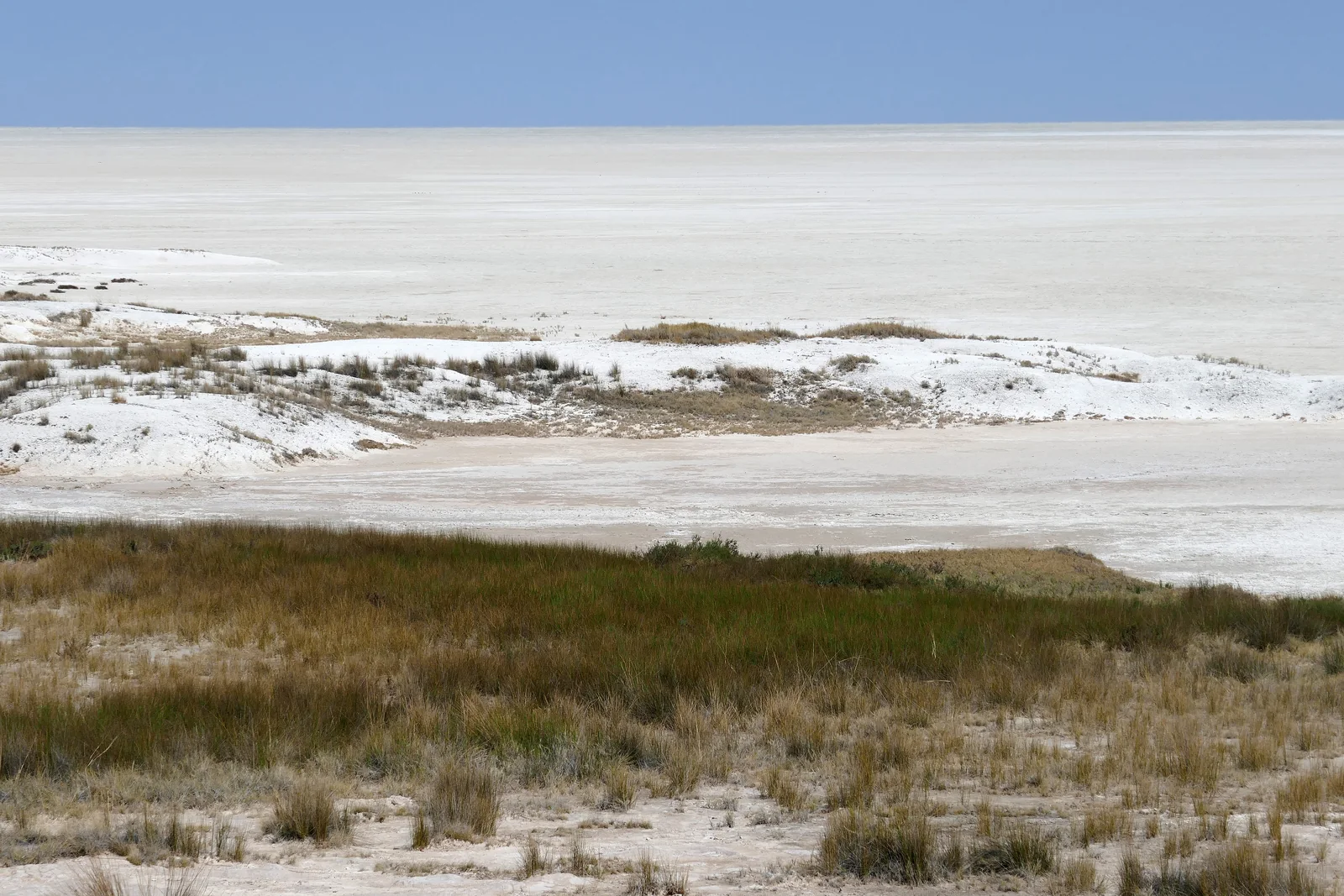

The pan gives Etosha a distinctive sense of space. A pale surface can occupy much of the view while an animal appears as a small, dark interruption. Spend a moment looking at the whole setting before reaching for a close photograph: the horizon, the ground near the road and the vegetation at the edge all contribute to the picture.
Notice the edge
Visit Namibia’s park overview describes Etosha’s salt pans alongside grass, shrub and woodland environments. The park is more varied than a single white expanse. A useful first question is simply where one setting gives way to another.
Compare a broad view with a closer observation. What changes in the ground colour? Where does vegetation begin? Is the distant shape an animal, a tree or a feature of the land? Those questions encourage patient looking without turning every pause into a search for a particular species.
Read photographs as moments
Pictures taken in different months or years can look strikingly different. A photograph records its own conditions; it does not establish the water level, visibility or wildlife you will find on your visit. Use captions to distinguish the location and date, and keep current conditions separate from an image that inspired the trip.
- Look for a named location rather than a generic safari caption.
- Check whether the photograph shows the main pan, a smaller pan or a waterhole.
- Keep the surrounding habitat in view when comparing images.
- Let a quiet scene remain a worthwhile observation.
Give the landscape time
A plan built entirely around named sightings can make an open stretch feel like an interruption. Leave room to notice distance, light and the smaller details along the permitted route. This is a way to approach the visit, not a prediction about what will appear.
Continue with the habitat guide to compare the pan edge with leafy settings. Then use the planning checklist to connect your interests with transport and confirmed camp arrangements.